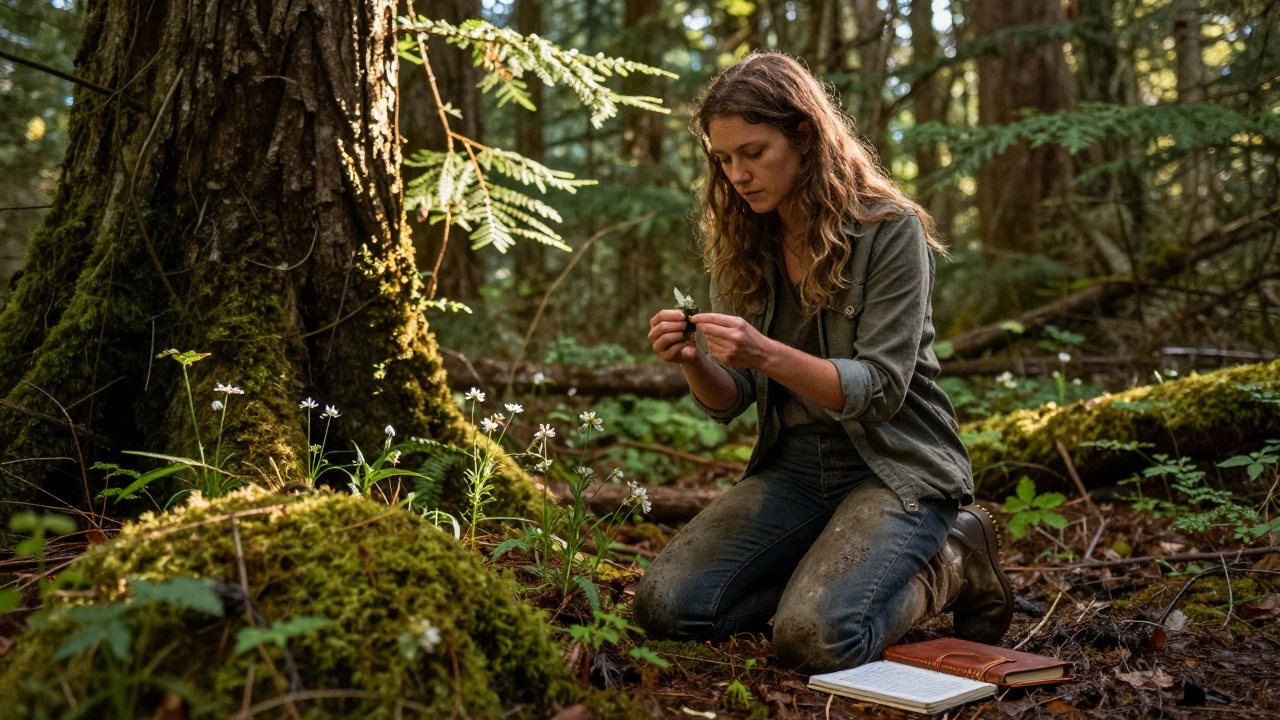
Em Rose doesn’t just know plants-she talks to them. Not in a mystical way, but in the quiet, patient language of someone who’s spent years kneeling in the damp earth of Pacific Northwest forests, running her fingers over leaves, crushing stems between her thumbs, and smelling the oils that rise when the sun hits just right. She’s spent over 20 years learning what grows where, when it’s safe to pick, and how to turn it into something that helps. Her approach? No fluff. No hype. Just direct, hands-on knowledge passed down from elders, field guides, and trial-and-error mistakes that left her sick once or twice-so you don’t have to.
Some people call her a hobby whore. She doesn’t mind. She’s got a shed full of dried herbs, jars of tinctures labeled in shaky handwriting, and a notebook full of sketches of leaves she’s never seen before. She’s the kind of person who’ll drop everything to chase a rare mushroom after a rainstorm, or spend three hours comparing the serrations on a dandelion leaf versus a chicory one. And yes, if you’re scrolling through Paris nightlife forums looking for something else entirely-like escort paris 8-you might wonder why this matters. But here’s the truth: the same hunger for connection, for discovery, for something real beneath the surface, drives both. One leads to a bedroom in the 8th arrondissement. The other leads to a healing tea brewed from wild yarrow.
What You’re Really Looking For When You Identify Plants
Most people think plant identification is about matching pictures in an app. It’s not. It’s about learning patterns. A plant’s shape, its smell, how it grows in relation to other plants, the way the light hits its surface-all of it tells a story. Em doesn’t use PictureThis or PlantSnap. She uses her eyes, her nose, and her hands. And she teaches others to do the same.
Take mugwort. It’s everywhere in Seattle-growing along sidewalks, in abandoned lots, even pushing through cracks in driveways. Most people see it as a weed. Em sees it as a sleep aid, a dream enhancer, and a traditional remedy for menstrual cramps. The leaves are silvery underneath, with jagged edges and a bitter, camphor-like scent when crushed. You can dry them, roll them into smudge sticks, or steep them in hot water. But if you misidentify it? You might accidentally brew up something toxic, like common ragwort, which looks similar but has yellow flowers and no silvery underside. One wrong leaf can land you in the ER.
Herbalism Isn’t Just Tea
Herbalism is a full-spectrum practice. It’s not just drinking chamomile to calm down. It’s making salves for burns, tinctures for immune support, infused oils for sore muscles, and even smoke blends for emotional release. Em makes a balm from calendula and plantain that she swears works better than any store-bought cream for poison ivy. She learned it from a Navajo elder in Oregon who taught her to harvest plantain in the morning, when the dew is still on it, and to dry it in the shade-not the sun-so the active compounds don’t break down.
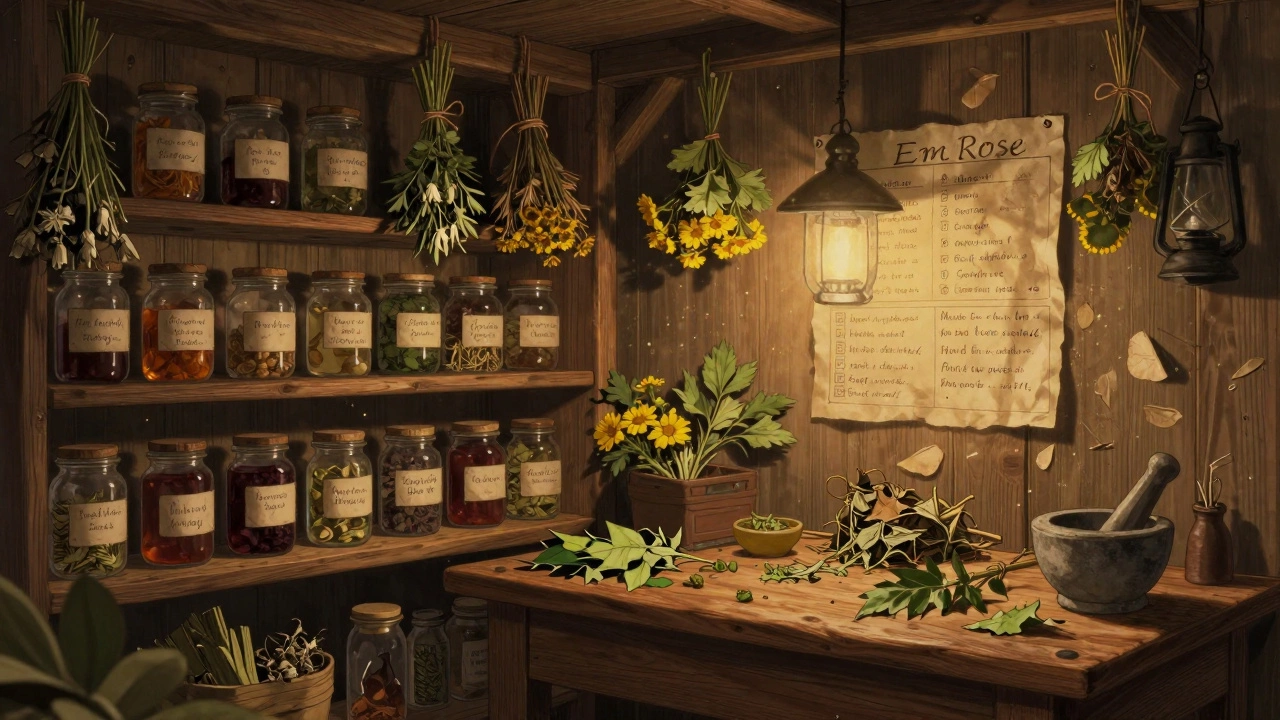
She keeps a chart on her wall: When to harvest, how to dry, which part to use, contraindications. One entry reads: “St. John’s Wort-harvest flowers in June. Avoid if on birth control or antidepressants. Can cause sun sensitivity.” She doesn’t just memorize this-she tests it. She’s given it to friends with mild depression. She’s tracked their sleep, mood, and energy levels for months. No grand studies. Just real people. Real results.
The Dangerous Myth of ‘Natural = Safe’
Here’s the thing nobody tells you: just because something grows in the wild doesn’t mean it’s safe. Poison hemlock looks like Queen Anne’s lace. Deadly nightshade looks like a cute berry. And yes, there are people out there who’ve eaten foxglove thinking it was comfrey-because both have bell-shaped flowers. Em has a rule: if you’re not 100% certain, don’t touch it. Not even to smell it.
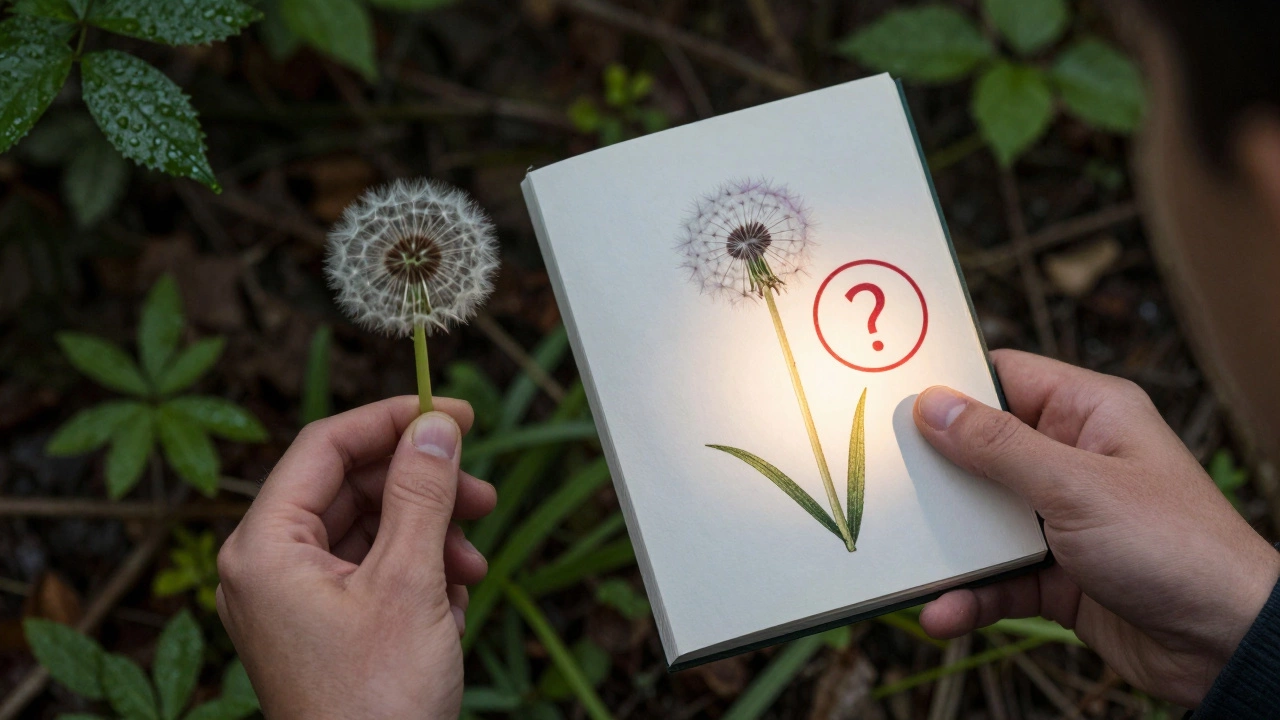
She once taught a class where a student brought in a plant they found in their backyard. They were sure it was echinacea. Em looked at it, touched it, smelled it. “That’s a dandelion,” she said. The student was embarrassed. “But it has purple flowers!” they said. Em smiled. “Dandelions can turn purple if they’re stressed. Or if they’re hybrids. Or if they’ve been sprayed.” She didn’t laugh. She didn’t scold. She just handed them a field guide and said, “Now go back and look again. Don’t trust your first guess.”
Where to Start If You’re New
You don’t need a degree. You don’t need expensive gear. You just need curiosity and a notebook.
- Start with one plant you see every day. Dandelion. Plantain. Clover. Pick one.
- Draw it. Sketch the leaves, the stem, the flower. Don’t worry about art-just capture the shape.
- Smell it. Crush a leaf. Note the scent. Is it sharp? Sweet? Bitter?
- Look it up. Use a local guide like Plants of the Pacific Northwest Coast by Jim Pojar and Andy MacKinnon. Not an app. A book.
- Wait a week. Then go back. See if you can find it again. Can you recognize it without the book?
Do that for three months. You’ll know ten plants by heart. And you’ll start seeing the world differently. You’ll notice how the same plant grows differently in shade versus sun. How it changes with the seasons. How animals interact with it. That’s when herbalism stops being a hobby and starts becoming a relationship.
What You Should Never Do
Don’t harvest from roadsides. Car exhaust, pesticides, and heavy metals build up in plants near traffic. Don’t take more than 10% of a patch. Don’t harvest endangered species. Don’t pick plants from private land without permission. Don’t assume your grandma’s remedy is safe-herbs interact with medications in ways you can’t predict.
Em keeps a list of plants to avoid entirely unless you’re trained: monkshood, wolfsbane, jimsonweed, and oleander. She doesn’t even keep them in her garden. “If you don’t know how to handle it,” she says, “it doesn’t belong in your hands.”
Why This Matters Now
We’re living in a time when people are tired of pills with side effects, of corporate health systems that treat symptoms but never ask why you’re sick. Herbalism isn’t a rebellion-it’s a return. To observation. To patience. To knowing where your medicine comes from.
Em’s clients aren’t just hippies in tie-dye. They’re nurses, teachers, veterans, single moms. One woman came to her after chemotherapy, desperate for something to help with nausea. Em taught her to sip ginger tea made from fresh root she’d dug up herself. Another man, a firefighter with chronic back pain, started using a topical salve with arnica and comfrey. He hasn’t touched ibuprofen in two years.
It’s not magic. It’s science, old and new, mixed with common sense.
Where Em Rose Gets Her Information
She doesn’t follow influencers. She doesn’t buy supplements from Amazon. She learns from:
- Local tribal elders who’ve preserved plant knowledge for centuries
- Botanists at the University of Washington Herbarium
- Old herbal texts like The Herbalist’s Bible by John Gerard
- Field guides with detailed illustrations-not photos
- Her own experiments, documented in journals dated back to 2003
She once spent six months tracking the blooming cycle of wild bergamot to figure out the best time to harvest for maximum essential oil content. She didn’t publish it. She didn’t post it on Instagram. She just wrote it down. And now, when someone asks her how to make a calming tea from it, she knows exactly what to say.
Final Thought: It’s Not About the Plant
It’s about paying attention. In a world full of noise, plant identification is a quiet act of resistance. It’s choosing to slow down. To notice. To care. To learn something that can’t be bought, sold, or algorithmically pushed to you.
Em Rose doesn’t sell herbs. She doesn’t have a website. She doesn’t run a YouTube channel. She gives away cuttings. She teaches in parks. She answers texts at midnight from people who found a strange plant in their yard. And sometimes, when the rain’s falling and the forest smells like wet earth and pine, she’ll sit under a cedar tree and whisper thanks-to the plant, to the soil, to the ancestors who knew this before she was born.
And if you’re out there, scrolling through something else-something shiny, something fast, something that promises pleasure without effort-maybe you need to kneel in the dirt for a while too. Not because you want to be a herbalist. But because you want to remember what it feels like to be part of something real.
And if you’re looking for something else entirely-something that promises escape, connection, or thrill-you might find it in a sex club paris. But the kind of connection that lasts? That’s the kind you find in the quiet, in the soil, in the slow, patient work of learning what grows.